
.png "Advanced Surface Creation")

Topoplan - A digital terrain modeling tool
nanoCAD's Topoplan module extends the nanoCAD platform with tools for digital terrain modeling and documentation. It is designed to make the work of surveyors more efficient.
New in Topoplan Module
- Projecting Objects onto a Surface
- 3D Slopes
- Structural Lines Along a 3D Slope
- Adding a 3D Slope to a Surface
- Extracting a Surface Boundary
- Geocalculator
- Route Objects and Route Labels
- New Commands in the Topoplan Module
- Updates and Improvements in Topoplan Module
Get Started
Key Features
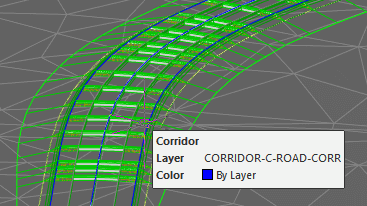
Support for Civil 3D Objects
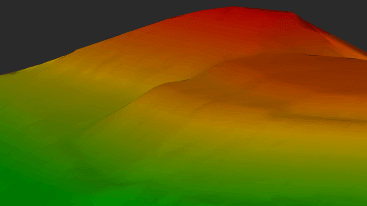
Textures Applied to Meshes and Calculations Performed
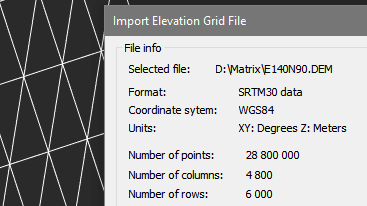
Multiple Data Sources for Creating Digital Terrain Models
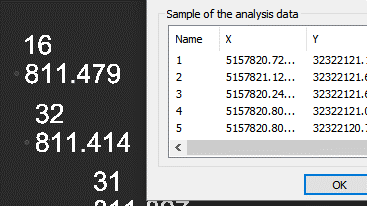
Import-Export Options
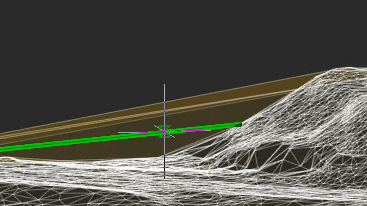
Surface and Contour Construction

Relief of the earth's surface
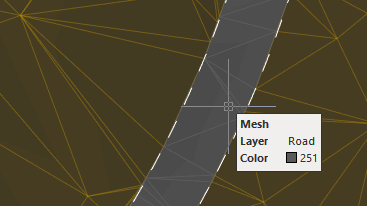
Additional Surface Tools
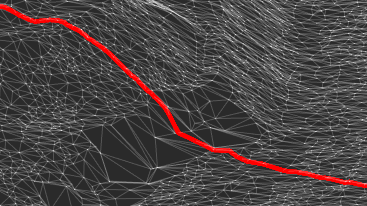
Additional Relief Element Tools
Topoplan for Land Surveyors in India
Accurate Topographic Mapping- Built for Indian Survey Projects
If you are a land surveyor, civil consultant, or infrastructure planner in India, you know how time-consuming contour generation and survey drafting can be. nanoCAD Topoplan is designed specifically for professionals who need accurate topographic mapping, surface modeling, and survey data processing- all within a native DWG environment.
- Process large survey datasets
- Generate contour lines automatically
- Work directly in DWG format
- Reduce manual drafting errors
Why Indian Land Surveyors Choose nanoCAD Topoplan?
Faster Contour & Surface Generation
Native DWG Compatibility (No Conversion Issues)
Built for Indian Infrastructure & Land Projects
Key Features That Improve Survey Productivity
While features are important, what truly matters is productivity. Here’s how Topoplan helps:
- Automatic Contour Line Creation
- Generate clean, editable contour lines instantly.
- Survey Point Management
- Import and organize thousands of survey points efficiently.
- Surface Modeling Tools
- Create digital terrain models (DTM) with precision.
- Profile & Cross-Section Tools
- Generate longitudinal and cross-sections for infrastructure projects.
- Customizable Templates
- Use standardized templates for faster project documentation.
Real-World Use Cases

Land Development Projects

Road & Highway Planning

Township & Smart City Planning

Agricultural & Rural Mapping
Who Should Use nanoCAD Topoplan?
- Licensed Land Surveyors
- Civil Engineering Consultants
- Infrastructure Planning Firms
- Municipal Authorities
- Government Contractors
- Surveying Startups & SMEs
Affordable Survey CAD Alternative in India
Many surveying firms struggle with expensive CAD licenses. nanoCAD Topoplan provides:
- Professional surveying tools
- Native DWG workflow
- Cost-effective licensing
Ideal for small and mid-sized firms looking for powerful tools without enterprise-level pricing.
Get a Quote


How nanoCAD Topoplan Improves Your Workflow
While features are important, what truly matters is productivity. Here’s how Topoplan helps:
- Step 1: Import Survey Data
- Bring in point data from field surveys. Google Earth KML/KMZ files
- Step 2: Generate Terrain Model
- Create digital surface models instantly.
- Step 3: Create Contours
- Automatically generate contour lines.
- Step 4: Export & Collaborate
- Share data in DWG and GIS formats with project stakeholders
Why Choose nanoCAD Topoplan Over Generic CAD Tools?
| Generic CAD | nanoCAD Topoplan |
|---|---|
| Manual contour drawing | Automatic contour generation |
| Limited survey tools | Dedicated survey module |
| File conversion issues | Native DWG support |
| Expensive licensing | Affordable pricing |
Boost Accuracy. Save Time. Deliver Faster.
If you handle land survey projects in India, nanoCAD Topoplan gives you the tools you need to:
- Improve drafting accuracy
- Reduce project turnaround time
- Simplify collaboration
- Deliver professional terrain documentation
Quick Video Guides
Advanced FAQ for nanoCAD Topoplan module
What is nanoCAD Topoplan used for?
nanoCAD Topoplan is a specialized land surveying and topographic mapping module designed for contour generation, surface modeling, and terrain analysis within a DWG-based CAD environment.
Is nanoCAD Topoplan suitable for Indian land survey projects?
Yes, it is designed to handle large datasets commonly used in Indian infrastructure, municipal, and land development projects
Can I generate contour lines automatically in Topoplan?
Yes. The software allows automatic contour generation from imported survey points, significantly reducing manual drafting time.
Does nanoCAD Topoplan support DWG files?
Yes, it works directly with native DWG format, ensuring seamless collaboration with architects and engineers.
Who should use nanoCAD Topoplan?
It is ideal for land surveyors, civil engineers, infrastructure consultants, municipal planners, and government contractors.
What types of survey data formats can be imported into nanoCAD Topoplan?
nanoCAD Topoplan supports importing common survey point data formats such as TXT, CSV, and coordinate-based datasets. This allows surveyors to efficiently process total station and GPS field data for terrain modeling and contour generation.
How does nanoCAD Topoplan generate contour lines from survey points?
The software uses triangulation-based surface modeling (DTM/TIN methods) to create a digital terrain model from imported survey points. Users can then automatically generate contour lines at defined intervals and edit them dynamically.
Can nanoCAD Topoplan create digital terrain models (DTM) and surface profiles?
Yes. nanoCAD Topoplan includes tools for building digital terrain models, generating longitudinal profiles, and creating cross-sections required for road, highway, and land development projects.
Is nanoCAD Topoplan suitable for large-scale land development projects in India?
Yes. The module is optimized to handle large coordinate datasets typically used in Indian infrastructure, township, and municipal survey projects, ensuring stable performance and accurate terrain representation.
Does nanoCAD Topoplan maintain native DWG compatibility during survey workflows?
Yes. All survey drafting, contour generation, and terrain modeling operations are performed directly within the native DWG environment, eliminating the need for file conversion and preserving data integrity.
Can users edit contour lines and surface models after generation?
Yes. Contours generated in nanoCAD Topoplan remain fully editable. Users can smooth, adjust intervals, modify vertices, and refine terrain models to meet project-specific requirements.
Does nanoCAD Topoplan support coordinate systems used in Indian surveying projects?
The software supports working with standard coordinate-based survey data commonly used in Indian projects. Users can manage point coordinates accurately for mapping, alignment, and land parcel documentation workflows.
How does nanoCAD Topoplan assist in road and highway alignment projects?
nanoCAD Topoplan enables engineers to create terrain surfaces, generate longitudinal profiles, and produce cross-sections along alignments, which are essential for road and highway design and earthwork estimation.
Can nanoCAD Topoplan be integrated into existing civil and GIS workflows?
Yes. Because it works in native DWG format and supports standard point data imports, nanoCAD Topoplan can be incorporated into many existing CAD-based civil and surveying workflows.
Is nanoCAD Topoplan appropriate for government and municipal survey documentation?
Yes. The module is suitable for producing standardized topographic drawings, contour maps, and land development documentation commonly required in municipal and government infrastructure projects.